
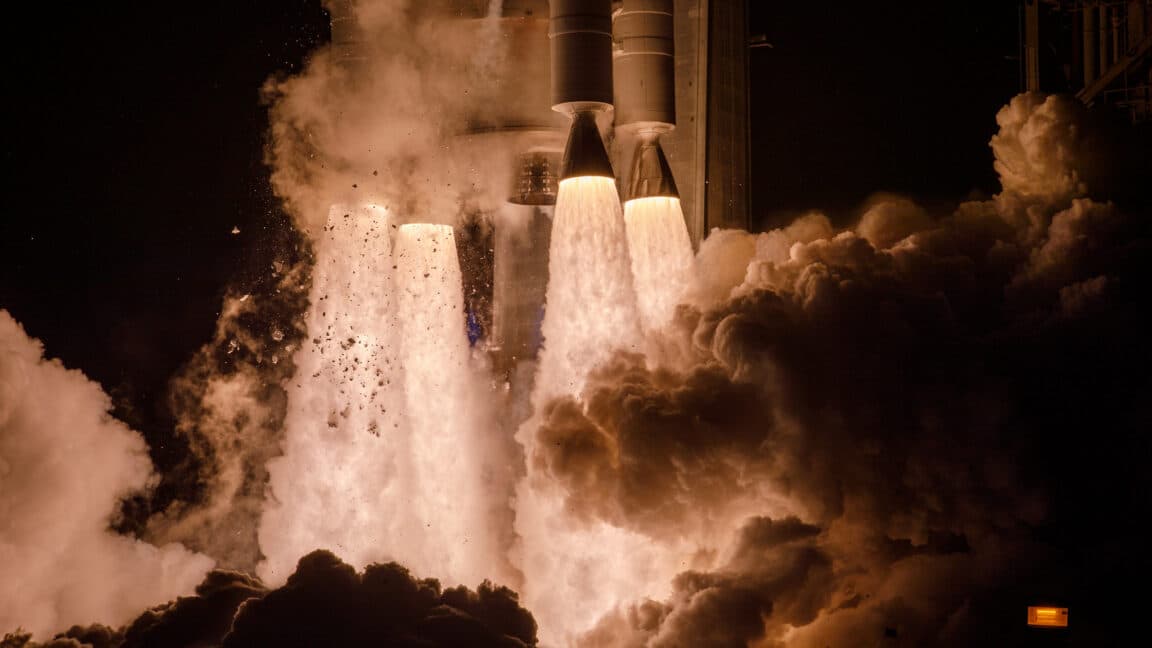
Officials expect the investigation into a booster anomaly on ULA's Vulcan rocket to last multiple months.
The Invisible Battleground: Why GPS Interference is a Growing Concern
Global Positioning System (GPS) is more than just a navigation tool for our smartphones; it's the bedrock of modern infrastructure. From military operations and aviation to financial transactions and emergency services, GPS provides the precise timing and positioning data that fuels our world. Protecting this vital utility falls largely to the U.S. Space Force, whose mission includes ensuring unhindered access to and use of space capabilities, including GPS.
However, GPS is under constant threat from various forms of interference. These range from intentional jamming and spoofing by adversaries seeking to disrupt communications or mislead navigation, to accidental interference from other satellite signals, ground-based transmitters, or even natural phenomena. As our reliance on space-based assets grows, so does the complexity of identifying, mitigating, and protecting against these threats.
ULA's Role: A Necessary Complication in a Crowded Orbit
United Launch Alliance (ULA) stands as a cornerstone of America's space launch capabilities, a critical partner for national security missions, including launching GPS satellites themselves. ULA's rockets, like the Atlas V and the new Vulcan Centaur, are essential for placing vital government and commercial payloads into orbit, ensuring U.S. access to space.
Yet, the very success of launch providers like ULA in enabling more missions paradoxically contributes to the Space Force's challenge in managing GPS interference. Here's why:
Increased Orbital Congestion: Every launch, regardless of its purpose, adds objects to Earth's crowded orbital highways. While ULA's payloads are well-behaved and tracked, the sheer volume of satellites (from ULA and a myriad of other providers globally) complicates the overall space environment.
Space Domain Awareness (SDA) Challenges: The Space Force relies on sophisticated SDA to track objects, identify potential threats, and monitor the electromagnetic spectrum. A more congested environment, with a higher density of satellites transmitting signals, makes it harder to distinguish between benign operational signals, accidental interference, and malicious activity. It's like trying to hear a specific conversation in a bustling stadium.
Spectrum Management Complexity: As more satellites operate, the demand for and use of radio frequencies intensifies. While GPS operates on protected bands, the proximity of other signals or the sheer 'noise' in the spectrum can create conditions where detecting and isolating genuine interference sources becomes significantly more complex.
The Nuance: Not Causation, but Exacerbation
It's crucial to understand that ULA isn't actively causing GPS interference. Rather, their vital role in enabling access to space means they are contributing to the overall increase in space activity. This surge in orbital traffic, while economically and strategically beneficial, creates a more complex and challenging environment for the Space Force to safeguard critical assets like GPS.
Space Force's Multi-Front Defense Strategy
In response to these growing challenges, the Space Force is employing a multi-faceted approach to protect GPS and other space capabilities:
Resilient GPS Architecture: Developing and deploying next-generation GPS satellites (GPS III) with stronger, jam-resistant M-Code signals, and exploring alternative positioning, navigation, and timing (PNT) solutions.
Advanced Space Domain Awareness: Investing in cutting-edge ground-based and space-based sensors, along with advanced data analytics and AI, to improve tracking, identification, and characterization of all objects and activities in space.
International Norms and Collaboration: Working with allies and international partners to promote responsible behavior in space and establish norms to mitigate orbital debris and spectrum interference.
Rapid Innovation: Fostering new technologies and operational concepts to detect, localize, and mitigate interference sources more quickly and effectively.
Conclusion: Navigating the Paradox of Progress
The situation with ULA and GPS interference highlights a fundamental paradox of the modern space age: progress and innovation, while essential, inevitably introduce new complexities. ULA is an indispensable partner for the U.S. in maintaining its advantage in space. However, their continued success in launching more missions underscores the escalating challenges faced by the Space Force in ensuring the integrity and resilience of GPS in an increasingly congested and contested orbital environment.
The path forward requires continued collaboration between government, industry, and international partners, not just in launching capabilities, but also in developing the advanced SDA tools and resilient systems necessary to thrive in this new era of space activity.